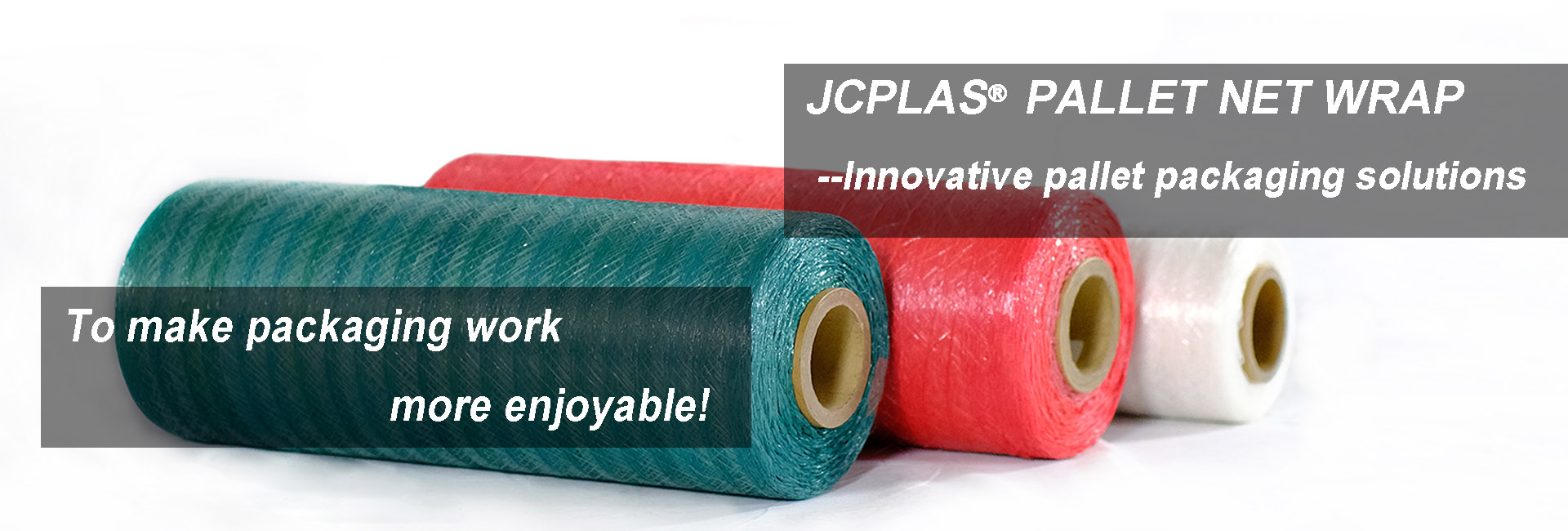
A pallet of onions leaves Ningbo in a 40HQ and reaches Rotterdam seven weeks later. Wrapped in stretch film, the cartons stay together and almost nothing else goes right. The load has been sitting in its own moisture since the second week, the middle layers have warmed up, and the first thing the importer does on opening the doors is pull a carton out of the bottom row.
Pallet net wrap exists for that one problem. It is a knitted HDPE mesh supplied on a roll and wrapped around a loaded pallet in two or three passes. The strands hold the cartons; the holes let air move through the stack. That is the whole concept, and everything else on this page is about the details that separate a roll which does the job from a roll which only looks like it will.
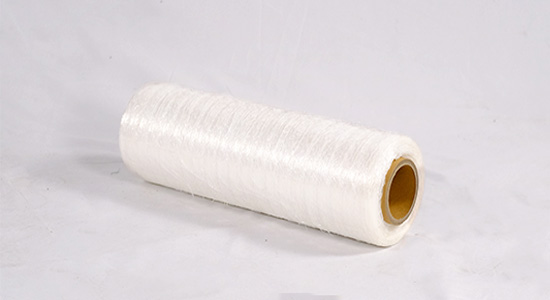
The photo above is a standard 50 cm white roll, the size that leaves our floor by the container load. It is not a glamorous product. It is, however, the difference between a pallet that arrives square and one that arrives leaning against the container wall.
What pallet net wrap is, in factory terms
Start with the material. HDPE tape is extruded, stretched until the polymer chains line up, then knitted into an open diamond mesh on a warp knitting machine. The mesh is slit to width, wound on a paper core, bagged and palletised. Nothing in that sequence is complicated, which is exactly why the quality difference between suppliers comes down to three unglamorous things: resin, tape thickness and how carefully the roll is wound.
Gram weight on our standard grades runs between 8 and 10 g/m². That number, multiplied by width and length, is the weight a full roll should have. When a buyer tells us a competitor's 50 cm × 1,000 m roll weighs six kilos, we know the length is short or the tape is thin, and no amount of sales talk changes the arithmetic.
We use virgin resin rather than regrind. Recycled material can be made to look identical on a sample and then behave differently at metre nine hundred: the mesh narrows, the tape goes brittle at the fold, and the last third of the roll starts breaking inside the carriage. For a warehouse wrapping forty pallets a day that is an interruption; for an export line it is a missed vessel.
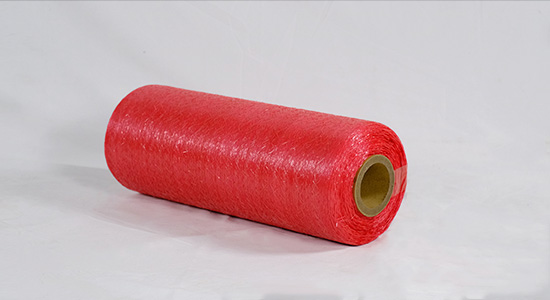
Widths are 50 cm as standard, with 75 cm for wide loads and split rolls on request. Roll lengths run 500 m and 1,000 m for hand dispensers and 3,500 m for machine carriages, on 5 cm or 7.6 cm cores. White, green and red are stock colours; anything else is a minimum-quantity conversation.
How pallet net wrap goes onto a loaded pallet
The application is close enough to stretch film that an experienced operator needs ten minutes to switch, with one difference that catches everybody the first time: mesh has no cling. The tail will not stick to itself, so the start has to be fixed mechanically.
- Square the load. Mesh holds a good stack; it does not straighten a bad one. Push the cartons back into line, keep the corners vertical and make sure nothing overhangs the deck. Ten seconds here saves a re-wrap at the dock.
- Mount the roll the right way round. The mesh should leave the roll flat. A twisted roll spirals up the load and leaves the base exposed on one side, and the operator usually blames the net.
- Anchor the tail. Tuck it under the top layer of cartons or tie it off on the pallet stringer. On a machine, the carriage clamp does this for you, which is one reason automated lines get a tidier result from the same roll.
- Wrap from the bottom up. Two or three passes at the base, where the forklift makes contact, then spiral upward with roughly a third of the width overlapping. One or two passes across the top closes the load.
- Finish and tuck. Cut at the top corner and push the tail under the last pass. If the pallet will stand in rain, add a top sheet or a film band — the mesh is not a roof.
Tension is the part operators get wrong most often. By hand, pull until the open area of the mesh closes to about half; that is roughly the point where the wrap grips without crushing the carton edges. On an automatic wrapper, set carriage tension so the marker lines just touch after the load has settled. Over-tensioned mesh does not hold better, it just cuts into the top layer of product and springs back loose overnight.
How many pallets one roll actually covers
Take a common 1.2 × 1.0 m footprint, 1.2 m high. One pass is about 4.4 m of mesh. Three passes, plus overlap and the tail, lands near 15 m per pallet, so a 1,000 m hand roll covers roughly 60 to 70 pallets and a 3,500 m machine roll about 230. A pallet 1.6 m high on a 1.2 × 1.2 m deck takes closer to 20 m per pallet, and the count drops to about fifty.
Run that sum against any quotation you receive. It is the fastest way to compare two prices that look the same on paper and are not the same in the warehouse.
Three grades, three different jobs
Almost every sourcing mistake we see comes from buying the wrong grade rather than a bad roll. The three we knit are not marketing tiers; they behave differently under tension.
| Series | Material | Elongation | Common sizes | Colours | Rolls / pallet |
|---|---|---|---|---|---|
| Classic, non-elastic | 100% virgin HDPE | None, fixed width | 50 cm × 500 / 1,000 / 3,500 m | White, green, red | 88–256 |
| Stretch pallet net | Virgin HDPE, stretch modified | ≥30% | 50 cm × 500 / 1,000 / 3,500 m; 75 cm × 3,500 m | White, green, red | 50–192 |
| Stretch net, marker line | Modified virgin HDPE with visual line | ≥30% | 50 cm / 75 cm × 3,500 m | White, green | 50–192 |
Non-elastic is the workhorse for square, stable loads: bricks, roof tiles, firewood, bagged goods, nursery stock. It keeps its width and gives the same containment on the first pallet of the shift as the last.
Stretch pallet net is for loads that are not quite square. The 30 percent elongation lets the mesh pull back around a bulging carton or a stack of bagged produce and stay tight without cutting in. It also wraps more pallets per roll, which is why high-volume fruit exporters moved to it first.
Stretch net with a marker line solves a supervision problem more than a packaging one. The line lets an operator count passes at a glance and keeps the web from narrowing as it stretches, so a 50 cm roll still covers 50 cm at the top of the load. On a two-shift line with rotating staff, that alone usually pays for the upgrade.
Where mesh earns its place — and where film still wins
Pallet net wrap is not a universal replacement for film, and suppliers who claim otherwise have not spent a season in a packing house. It wins in five situations:
- Fresh produce in cartons or mesh bags. Onions, potatoes, citrus, carrots. Air moves through the stack, field heat leaves faster after a cold room, and there is far less condensation on the cartons.
- Cut flowers and nursery stock. Boxes of stems and trays of seedlings bruise less against mesh than against film, and the load does not sweat during a long transit.
- Sod, turf and potted plants. Heavy, damp, and badly served by sealed film.
- Bricks, roof tiles, firewood. Square loads where cheap containment is the whole requirement and nobody needs the load to breathe.
- Chilled and dairy goods moving between cold stores. Cheese and bagged product that should not sit in trapped moisture.
Where film wins, plainly: anything that must stay dry. Paper cartons, cement bags, textile rolls, machinery, anything with a printed surface facing the container wall. Rain passes through mesh in the same second it passes through the holes. Small parts are another case — if a component can fall through a mesh opening, it will, somewhere between the loading bay and the vessel.
One more limit worth stating. Mesh is a containment material, not a stacking material. It will not hold a load that was unstable before wrapping, and it will not stop a badly palletised stack from leaning in a container that brakes hard. Fix the stack first.
Pallet net or stretch film: the comparison that matters
| Point | Pallet net wrap | Stretch film |
|---|---|---|
| Air movement | Open mesh, continuous airflow | Sealed layer, condensation inside |
| Passes per pallet | 2–3 | 5–6 overlapping layers |
| Material per pallet | Lower, and lighter to handle | Higher, especially on heavy loads |
| Irregular loads | Stretch grades grip and recover | Good, with enough layers |
| Rain and dust | No protection | Full protection |
| Inspection in transit | Cargo visible through the mesh | Must be unwrapped |
| Removal and disposal | Cuts away in one piece, light HDPE | Bundles of used film |
Cost per pallet is where the decision is usually made, and the honest version is this: mesh wins on material and on passes, film wins on protection and on machines already set up for it. For a produce exporter shipping forty containers a season, the material saving is real money. For a warehouse moving dry cartons across town, the saving is small and the film is already on the turntable.
What to check before you book a container
Five checks, all of them cheap, and all of them things a buyer can do in an afternoon with a sample roll.
- Weigh three rolls. Width × length × gram weight should land within a few percent of the stated weight. If it does not, the length is short.
- Measure the width at both ends. A centimetre of drift is normal; two centimetres means the slitting is off and the web will wander on the carriage.
- Pull out ten metres and look at the mesh. Even diamonds, no fused blobs, no thin lane along either edge. The edge takes the abrasion on every wrap, so a weak edge fails first.
- Check the cores. A crushed core means the roll was dropped, and the last two hundred metres will jam at the worst moment.
- Wrap two pallets on your own line. One normal load, one awkward one. If the machine tension, the carriage height and the roll width agree, the container is a safe order.
We send sample rolls for exactly this, and we would rather answer a sceptical question before the order than a claim after it.
About us
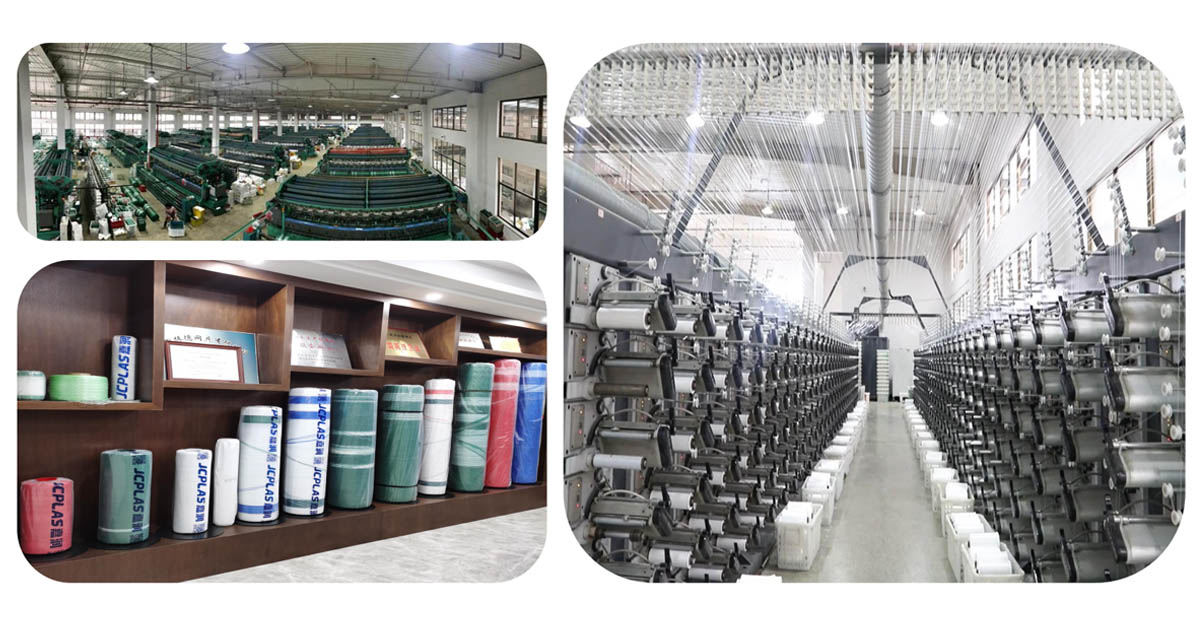
TOTAL PACKAGING SOLUTION is what JCPLAS means, and we take the words literally. Design, management, manufacturing and delivery sit with one team, not with four suppliers who point at each other when a shipment is late.
We are a packaging manufacturer in Ruian, Zhejiang, 28 years in this trade and two generations in the same business. What that buys a customer is not nostalgia. It is a factory that knows which resin lot knits well in humid weather, a stock position that covers the weeks when everybody orders at once, and a phone that gets answered in the season when it matters.
The range is deliberately narrow: bale net wrap, baler twine, silage film, pallet wrapping net, anti-bird net and the packaging lines that sit around them. Keeping it narrow is how we hold prices at industry-leading levels without shaving the material, and how a distributor can build a season's programme on one supplier instead of three.
Why buyers come back
A CHEAP ROLL IS NEVER ONLY THE PRICE OF THE ROLL
It is also the pallet that arrives leaning, the cartons that get rejected at the far end, and the hour spent clearing a jammed carriage in the middle of a loading window. Buyers who have been through that once stop shopping on unit price and start asking for the same gram weight, the same pallet pattern and the same core as last season. That is the order we are set up to repeat.
Vision
To make baling and packaging work more enjoyable.
Mission
To put customers first with reliable products and service that holds up under pressure, so they can compete in their own market and take share from someone else.
What buyers ask about pallet net wrap
What is pallet net wrap used for?
Holding a loaded pallet together in place of stretch film, while leaving the sides open to air. Fruit and vegetable pallets, cut flowers, nursery stock and sod, and also bricks, roof tiles, firewood and bagged goods.
Is pallet net wrap cheaper than stretch film?
Per pallet, usually. Two or three passes of mesh against five or six layers of film, and less material per square metre. Compare cost per wrapped pallet, not price per roll, and include freight before you decide.
How many pallets does one roll cover?
On a 1.2 × 1.0 m footprint at 1.2 m high, about 15 m of mesh per pallet at three passes. That is roughly 60 to 70 pallets from a 1,000 m hand roll and about 230 from a 3,500 m machine roll.
Will it run on an automatic wrapping machine?
Yes, if the core and width match the carriage. Most turntables are set for a 50 cm web on a 76 mm core. Check the carriage height and pre-stretch setting before ordering; 75 cm rolls do not fit every machine.
Does it keep rain off the load?
No. Water passes through the mesh. If the pallet stands in rain or crosses a monsoon belt, add a top sheet or use film. The mesh holds the load and lets moisture out; it does not keep weather off.
What decides the wholesale price?
Gram weight, virgin or recycled resin, colour, how accurately the length is measured, core type, packing and freight. Two rolls of the same size can differ by 30 percent in price and by much more in pallets wrapped.
Get a quote for your grade
Send five lines and we can quote properly: the load (what is on the pallet and how heavy it is), the grade you think you need, width and roll length, monthly or per-shipment quantity, and the destination port. Add whether the pallets stand outdoors; that changes the advice on film and top sheets more than it changes the mesh. Technical replies come back in English within one working day.