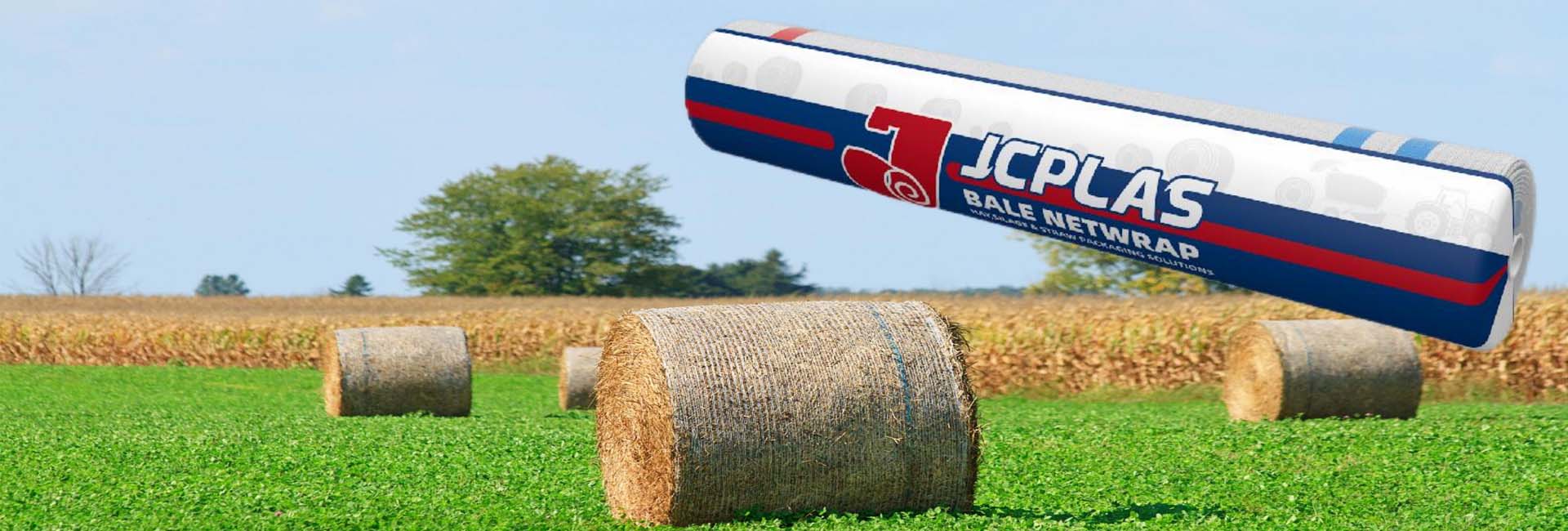
A bale wrapped in March and fed in the following February has spent eleven months in sun, wind, frost and at least one heavy rain event. During that time the net has to keep the bale cylindrical, stop the outer layer from peeling away and hold the shape when a loader lifts it two metres off the ground. Whether it does that job for twelve months or twenty-four comes down to four things: the UV additive, the edge wrap, the mesh weight and how the bales are stacked.
Good UV stabilized hay bale net wrap can last 12 to 24 months outdoors, depending on local sunlight and weather conditions. That range is wide because sunlight is not the same product everywhere. A roll that survives two summers in Tasmania will often fail inside one season in central Queensland or the Waikato, and the failure looks the same each time: the mesh goes brittle at the bale edge, then cracks into short lengths when the bale is moved.
What decides how long bale net wrap lasts outdoors?
Four variables do almost all of the work. Nothing else on the label moves the number much.
- UV loading in the masterbatch. The carbon-black or HALS package in the tape is what absorbs and disperses radiation. Too little and the mesh chalks and splits; too much and the tape gets stiff and feeds badly through the rollers. This figure matters more than grams per square metre.
- Local radiation level. Clear-sky UV in the southern hemisphere runs noticeably higher than at equivalent latitudes in Europe, partly because of thinner ozone over that half of the planet and partly because of how much time bales spend uncovered.
- Edge wrap quality. The first 40 mm on each side of the roll takes the abrasion from the chamber and the load from the bale shoulder. A loose edge lets the whole wrap unravel from the rim inward.
- Storage pattern. Bales stacked two high in the open, with the flat end facing the afternoon sun, age fastest. Bales left in a single row under trees or against a shed wall can push well past the twenty-month mark.

What the 12 to 24 month figure actually covers
It covers continuous outdoor exposure with no cover and no shade, which is the harshest normal case. Inside that window the mesh keeps its tensile strength well enough to hold a 4x5 or 5x6 hay bale through handling, stacking and transport. Past it, degradation speeds up quickly rather than gradually — the tape is still intact one month and shredding the next.
Where the bales are covered, the number stops being useful. Hay kept under a tarp, in a shed or in a shaded stack will normally outlast the net itself, and the limit becomes handling damage rather than sunlight. Silage bales wrapped in film and net are a different case again, since the film takes most of the radiation.
Why does Net Wrap fail at the bale edge first in high-UV countries?
Because the edge is where three stresses meet at once. The mesh is doubled over itself there, it rubs against the chamber roller during every wrap, and it sits in the same plane as the sun for the whole storage period. Once the edge tape loses its elasticity, the wrap loosens, the bale shoulder bulges and the rest of the net starts to work loose from the outside in.
This is why we do not treat UV as a single product attribute. For southern hemisphere customers — Australia, New Zealand, South Africa, Argentina, Chile — the tape runs a heavier UV package than the same width sold into northern Europe. The tensile figure stays the same on the data sheet; only the additive loading changes, and that is what stretches service life from roughly one season to two.
Which grade of bale net wrap suits southern hemisphere hay?
For open-air hay storage in high-UV districts we normally recommend the UV X-treme grade in 4,200 N (64 inch) or 4,500 N (67 inch) for large square-shouldered bales, and 3,700 N (51 inch) for the standard 4x5 round baler. The heavier mesh is less about strength than about how many wraps it takes to close a bale: fewer wraps means less mesh exposed, less material consumed and a tidier shoulder that sheds water instead of trapping it.
A lighter 3,500 N roll still has a place, mostly for hay baled and fed within the same season, or for contractors who cover their stacks. Selling a two-season product into a one-season job is a cost the buyer never recovers.
Heavy duty specification, UV X-treme grade
| Size | Raw material | UV protection | Breaking strength | Gross weight / roll | Pack |
|---|---|---|---|---|---|
| 48 in x 9840 ft | HDPE | UV X-treme | 3,500 N | 87.5 lbs | 16 rolls / pallet |
| 51 in x 9840 ft | HDPE | UV X-treme | 3,700 N | 92.6 lbs | 16 rolls / pallet |
| 64 in x 7000 ft | HDPE | UV X-treme | 4,200 N | 84.5 lbs | 16 & 20 rolls / pallet |
| 64 in x 8000 ft | HDPE | UV X-treme | 4,200 N | 95.0 lbs | 16 rolls / pallet |
| 64 in x 9000 ft | HDPE | UV X-treme | 4,200 N | 107.0 lbs | 16 rolls / pallet |
| 67 in x 7000 ft | HDPE | UV X-treme | 4,500 N | 89.5 lbs | 16 & 20 rolls / pallet |
| 67 in x 8000 ft | HDPE | UV X-treme | 4,500 N | 100.8 lbs | 16 rolls / pallet |
| 67 in x 9000 ft | HDPE | UV X-treme | 4,500 N | 113.5 lbs | 16 rolls / pallet |
Other widths and roll lengths are knitted to order, from 1.23 m up to 1.70 m and 3,000 m on a beam, so a baler with an unusual chamber does not have to compromise on coverage.
How do you test a roll before committing to a container?
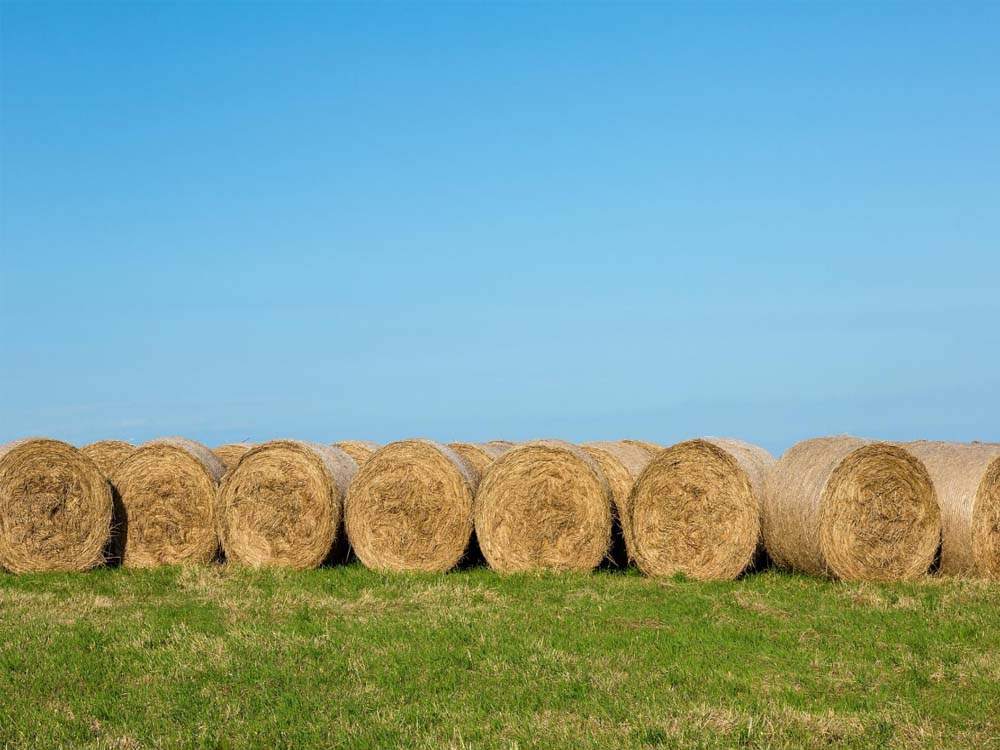
Two rolls and one summer will tell you more than any brochure. Cut ten metres, weigh it, and compare the weight against the stated length and gram weight — if the numbers do not reconcile, the roll is short. Then wrap four bales, stack two of them in the worst sun on your property, and leave them there through the hottest part of the season. Look at the edge wrap every eight weeks. Chalking is normal; cracking across the tape is not.
As a Net wrap manufacturer we ship free sample rolls for that trial and cover the courier only once, so the test stays cheap enough to run properly. For technical background on mesh grades and edge construction, our Agricultural Bale Net Wrap product page details the knitting and coating stages, and our note on Round Bale Net Wrap explains how chamber width changes the wrap count and the load on the edge.
About us
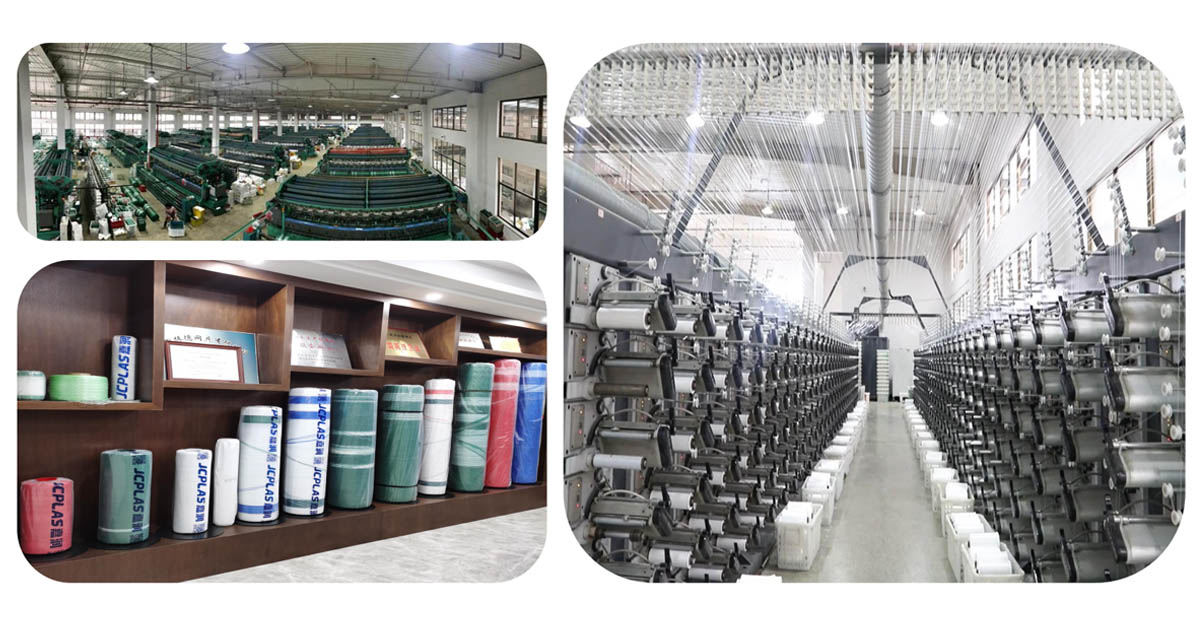
TOTAL PACKAGING SOLUTION is how we define JCPLAS. From design and management through to manufacturing and delivery, we supply a complete Total AG Packaging Solution, and that joined-up approach is what gives our customers an edge in their own markets.
Our work is to make packaging more efficient with practical innovation, and to answer the phone when a shipment matters.
For more than 28 years, across two generations, JCPLAS Co. has served the agricultural industry with year-round service and a stable product range: Bale Net Wrap, Baler Twine, Silage Film, Pallet Wrapping Net, Anti-bird Net and related packaging lines, all at prices that hold up against the market. Our aim is simple — to keep our partners supplied with the products and the pricing they need to lead in their own territories. We look forward to the next 28 years of the same.
Why us
OUR PRODUCTS ARE A SMALL BUT OFTEN DECISIVE PART OF THE SUCCESS OF A HARVESTING CHAIN
A cheap roll does not only cost the price of the roll. It costs the bale, the hay inside it, and the hours spent clearing a jammed chamber in the middle of a weather window. That is why repeat buyers of hay bale net wrap from us stop shopping on price alone and start asking for the same roll, the same pallet pattern and the same UV grade as last season.
Vision
To make baling and packaging work more enjoyable.
Mission
To prioritise our customers by providing reliable, high-quality products and exceptional service, so they can thrive in a competitive market and gain valuable market share.
What do hay growers ask most about hay bale net wrap?
How long does hay bale net wrap last outdoors?
Twelve to twenty-four months in open storage. The low end belongs to hot, high-UV districts where bales sit in full sun all season; the upper end belongs to temperate zones with more cloud and bales stacked in partial shade.
Does rain or sun shorten the life of hay bale net wrap more?
Sun, by a wide margin. Water passes through the mesh and drains away; ultraviolet radiation breaks the polymer chains in the tape. A wet bale in shade usually outlasts a dry bale in intense sun.
Can hay bale net wrap stay on the bale until feeding time?
Yes. It is made to be left in place through storage and transport and removed at the feeder. If a bale has been out for more than a year in a high-UV area, check the edge before moving it.
Does a heavier hay bale net wrap last longer outdoors?
Weight alone is not the answer. Heavier mesh resists tearing better, but the UV package decides how long it survives sunlight. A 3,700 N roll with a weak additive ages faster than a 4,200 N roll built for local radiation levels.
What width do I need for a 4x5 round baler?
Most 4x5 fixed and variable chamber balers take 48 inch or 51 inch net. Measure the chamber and confirm with us before ordering; a 64 inch roll in a 51 inch chamber wastes mesh on both edges and fouls the feed rollers.
Get a quote for your UV grade
Send the baler make and model, chamber width, the number of rolls you need, the destination port and roughly how long the bales stay in the open. With those four lines we can name the right UV grade, confirm pallet count and return an FOB price with lead time. Technical questions are answered in English and Chinese, usually within one working day.